
 Manufacturing
 Downloads
 Gallery
Commercial Steel Windows vs Residential: Manufacturing Differences
- 20 January 2026
- News
When architects and specifiers compare commercial steel windows and residential steel windows, the decision is rarely about whether one is “stronger” than the other. The practical difference sits in specification: the documented system limits and performance statements that shape what is manufactured, what glazing build-ups can be accommodated, how the system is sealed, and what evidence can be carried into design, tender and technical submissions.
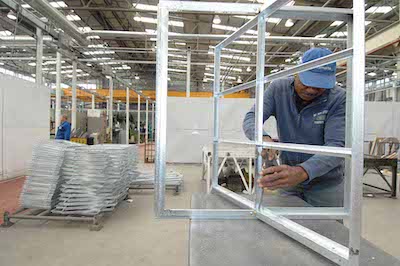
Steel windows and doors are manufactured in the UK, with a defined protection and finish sequence that is set out across system documentation: hot-dip galvanising after manufacture to BS EN ISO 1461, followed by Duralife® polyester powder coating. These foundations remain consistent across systems; the key differences emerge when the project brief drives a particular system selection, because each system is defined by glazing acceptance, sealing approach and performance values.
A shared manufacturing baseline across sectors
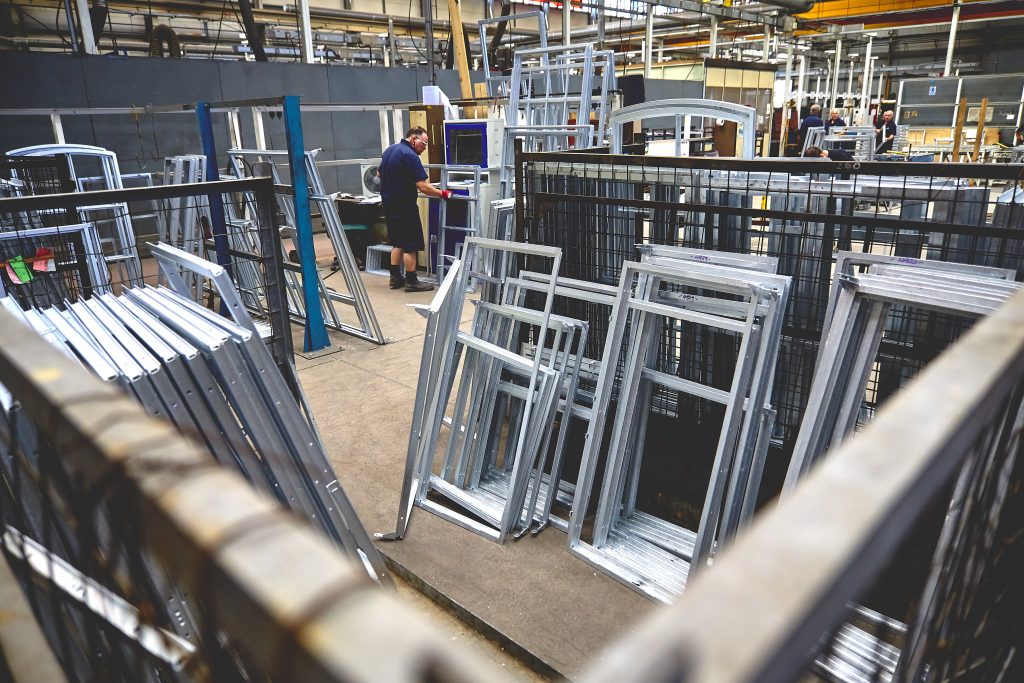
Commercial and residential projects do not sit on entirely separate manufacturing pathways. The baseline is a steel system fabricated and finished to a documented sequence, with corrosion protection and coating explicitly stated within system specifications.
Across Corporate® W20, Corporate® MW40 and Homelight® Plus, system documentation includes a consistent approach to durability: hot-dip galvanising after manufacture to BS EN ISO 1461 and Duralife® polyester powder coating as the applied finish. This is complemented by system-specific construction language—such as welded fabrication and stated tolerances—so the product can be scheduled and detailed consistently.
Where a system contains an additional construction feature, it is specified at system level. For example, Corporate® MW40 includes intermediate bars described as “hot tenon riveted.” These statements matter because they are written for specification: they are precise, repeatable, and suited to technical documentation.
The result is a clear framework for comparison. “Commercial vs residential” becomes a question of the specified system—what it will accept, how it is sealed, and what performance statements are available for the selected configuration.
System selection is where differences become visible
The most practical way to understand manufacturing differences between commercial and residential schemes is to compare three systems that are frequently referenced across different project types:
Each of these systems is defined by specification statements that describe glazing acceptance (maximum unit thickness), glazing bead form, sealing method, protection/finish sequence, and where applicable, published performance values and security options.
Residential-led specification outcomes: Homelight® Plus
Homelight® Plus is defined by system-level statements that are directly useful in residential specification and refurbishment contexts where a contemporary steel system is required.
Homelight® Plus system documentation states that the system will accept double glazing up to 24mm in thickness. It also states: “Glazing beads present no horizontal ledges on which dust and dirt can gather.” Weathersealing is specified as co-extruded double weatherstrips, described as an external rainscreen with an internal air seal. Protection is defined as hot-dip galvanising after manufacture to BS EN ISO 1461. Homelight® Plus also states that windows and doors are available in a configuration tested to PAS 24.
These are not general descriptions; they are specification boundaries. The glazing acceptance defines the maximum insulating glazing unit thickness within that system. The weatherstripping statement defines the sealing arrangement used within the system build-up. The glazing bead statement defines a specific glazing detail feature. The PAS 24 statement is presented as configuration-specific, which is critical when specifying security-related performance: the configuration must align to the tested configuration.
A multi-sector baseline: Corporate® W20
Corporate® W20 demonstrates why commercial and residential steel windows are not best understood as two categories of steel. W20 is defined by its own published system constraints, particularly glazing acceptance and gasket specification.
Corporate® W20 states that it will accept double glazing up to 16.4mm in thickness. It includes the same glazing bead statement: glazing beads present no horizontal ledges on which dust and dirt can gather. The system specifies gaskets complying with BS 4255: Part 1, manufactured from EPDM. Protection and finish again include hot-dip galvanising after manufacture to BS EN ISO 1461 and Duralife® polyester powder coating.
From a manufacturing and specification perspective, this provides a clear divergence point. If a scheme requires thicker glazing build-ups than the stated acceptance, the system selection changes. If a project requires a particular sealing strategy, W20’s documented EPDM gasket approach can be compared directly to alternative sealing approaches specified in other systems.
Commercial and industrial-led specification outcomes: Corporate® MW40
Corporate® MW40 provides the clearest published contrast because system documentation includes both glazing acceptance and a defined set of published performance values.
Corporate® MW40 states that it will accept double glazing up to 30.8mm in thickness. It includes the same glazing bead statement regarding no horizontal ledges. Weathersealing is specified as a compressible closed cell foam tape weatherseal. Protection is defined as hot-dip galvanising after manufacture to BS EN ISO 1461 and Duralife® polyester powder coating.
MW40 product documentation then provides additional published values that support technical discussion and specification. It references insulating glass units up to 32mm, water tightness / air permeability at 300 Pa, and wind resistance up to 2000 Pa. It also includes the material statement “100% Recycled Steel.”
For commercial and industrial schemes, Corporate® MW40 product documentation states insulating glass units up to 32mm, watertightness/air permeability 300 Pa and wind resistance up to 2000 Pa, and includes the material statement ‘100% Recycled Steel’.
What “manufacturing differences” mean in practice
Manufacturing differences between commercial and residential schemes are most reliably understood through what the system specifications define. Three areas are consistently visible across system documentation: construction descriptors, durability/finish sequence, and system-defined glazing and sealing.
Construction descriptors and fabricated details
Across Homelight® Plus, Corporate® W20 and Corporate® MW40, system specifications include consistent construction language such as welded fabrication and stated tolerances. Where a system includes additional detail, it is stated explicitly, such as MW40’s intermediate bars being “hot tenon riveted.”
It provides meaningful technical definition without drifting into assumptions about tooling or inspection methods that are not stated in system documentation.
Durability and finish sequence
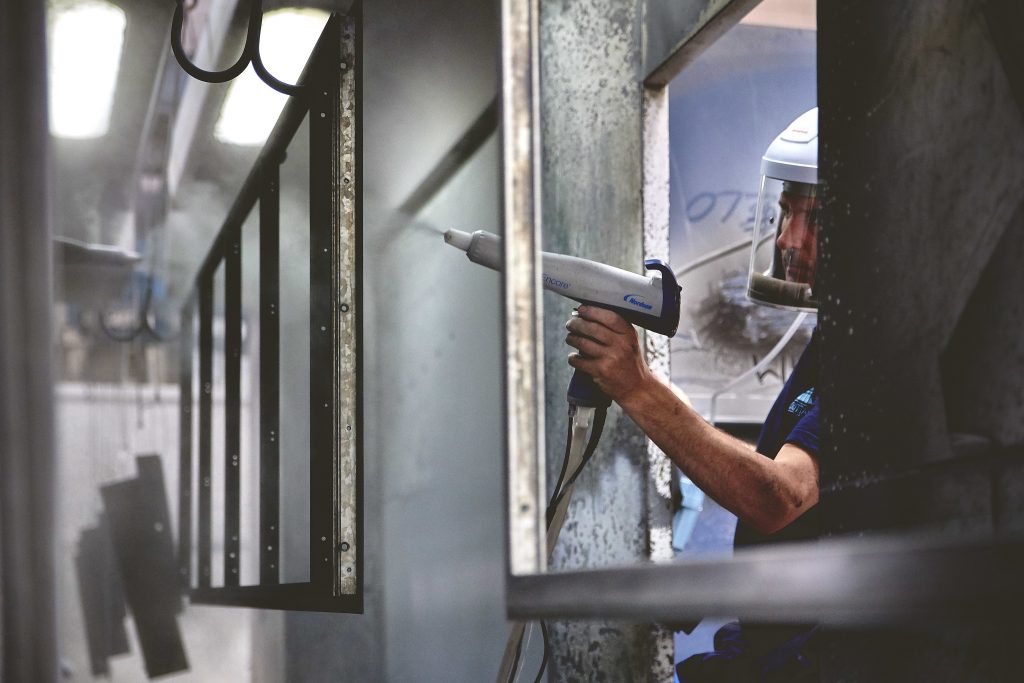
Across the compared systems, the protection/finish sequence is documented consistently: hot-dip galvanising after manufacture to BS EN ISO 1461 and Duralife® polyester powder coating.
This is important when comparing commercial and residential schemes because it confirms what does not change with project type. Durability is not treated as an optional add-on for one sector and not the other; it is described as part of the system approach.
Finish as delivered is galvanised and Duralife™ polyester powder coated in a range of colours; a wide selection is available (see the Crittall Duralife® Standard Colour Guide).
Glazing acceptance and sealing strategy
The clearest divergence sits in glazing acceptance and sealing method:
- Homelight® Plus: double glazing up to 24mm, co-extruded double weatherstrips (external rainscreen / internal air seal)
- Corporate® W20: double glazing up to 16.4mm, EPDM gaskets to BS 4255: Part 1
- Corporate® MW40: double glazing up to 30.8mm (NBS), IGUs up to 32mm (product documentation), compressible closed cell foam tape weatherseal
This combination—glazing unit thickness acceptance plus documented sealing approach—often becomes the practical discriminator when moving between residential-led and commercial-led requirements. The comparison remains measurable and schedule-friendly, because it is anchored to the system definition.

Performance values and where they are stated
System documentation may include published performance values depending on product and document type. Corporate® MW40 product documentation includes wind resistance up to 2000 Pa and watertightness/air permeability at 300 Pa.
For thermal performance, Corporate® W20 TE is presented with U-values as low as 1.4 W/m²K. When using thermal performance statements, Corporate® W20 TE is presented with U-values as low as 1.4 W/m²K (system/configuration dependent).
Fire-rated requirements and how the system changes
Where fire performance is required for internal steel partitions and doors, Innervision FR is presented as achieving FD30 fire resistance in accordance with BS EN 1634 (30 minutes protection). It is positioned for commercial environments including offices, schools, hospitals and retail.
This is an important distinction in commercial schemes: where fire performance is required, the specification routes through a defined system with a defined performance statement and standard reference, rather than treating steel as inherently fire-rated in every application.
Quality management and environmental management systems
System specifications state that design/manufacture/installation are carried out under management systems certified to BS EN ISO 9001 and BS EN ISO 14001.
In practice, these statements support the governance and traceability narrative that often sits alongside product performance in B2B procurement and specification: the system is not only defined by glazing acceptance and sealing, but also supported by documented management systems.