
 Manufacturing
 Downloads
 Gallery
How Crittall Manufactures Steel Windows Built for Long-Term Performance
- 15 December 2025
- News
If you’re searching for a windows manufacturer for a project where durability, slim sightlines and long-term reliability matter, it helps to understand what separates “a window that looks good on day one” from a window that continues to perform year after year.
With steel windows in particular, the difference is rarely cosmetic. It’s usually down to manufacturing discipline: how accurately frames are fabricated, how thoroughly corrosion protection is applied, how consistently the finish is controlled, and how well the completed unit is checked before it leaves the factory.
This guide explains how Crittall steel windows are manufactured (at a high level) and—more importantly—what those choices mean for your project. It’s written to help architects, contractors and building owners understand what “good” looks like when choosing a specialist steel windows manufacturer.
Why manufacturing quality matters when choosing a windows manufacturer
A well-designed steel window system can only deliver its full performance if it’s manufactured and finished correctly. In practice, manufacturing quality directly affects:
- Fit and installation: square frames and consistent tolerances reduce site adjustment and snagging
- Operation: properly aligned sashes and correctly fitted hardware improve smoothness and longevity
- Weathering: robust corrosion protection and a controlled coating system help the window withstand external exposure
- Aesthetics over time: consistent finishing and durable coatings support long-term appearance
- Lifetime value: longer service life can reduce replacement cycles and building disruption
Crittall’s own product guidance repeatedly links its corrosion protection and factory finishing system with long-life expectations—commonly stating life expectancy exceeding 60 years when frames are galvanised and finished with its Duralife® powder coating system (with appropriate maintenance).
What’s “good” manufacturing for steel windows?
Before diving into process, here’s a practical checklist of what you should expect from a reputable steel windows manufacturer, and how Crittall positions its approach.
1) Controlled corrosion protection
For external steel windows, corrosion protection is fundamental. Crittall specifies hot-dip galvanising as a core part of its protection system, commonly to BS EN ISO 1461, followed by a factory-applied finish.
Why it matters: hot-dip galvanising provides a bonded zinc layer that protects steel in external conditions—both as a barrier and through sacrificial protection if the surface is damaged in small areas.
2) A defined, repeatable coating system
Rather than treating paint as a cosmetic afterthought, quality manufacturers specify a complete finishing system with controlled preparation and curing. Crittall markets its finish as Duralife® polyester powder coat applied over a galvanised substrate.
Why it matters: powder coating is widely used for architectural metalwork because it produces a durable finish when applied and cured correctly, supporting long-term appearance and protection.
3) Precision fabrication (not just “assembly”)
Steel windows rely on accurate fabrication—especially at corners and around opening sashes. Crittall references precision machining and controlled manufacturing tolerances in its technical documentation and specifications.
Why it matters: accuracy supports easier installation, better operation and consistent sightlines.
4) Product range that matches real-world requirements
A good windows manufacturer isn’t “one product fits all.” Crittall manufactures multiple steel window ranges, including well-known systems such as Corporate W20, thermally enhanced Corporate W20 TE, Homelight, MW40, and the thermally broken T60 system.
Why it matters: different projects require different balances of heritage aesthetics, thermal performance, sightlines, and specification needs.
How Crittall steel windows are made: the key stages (and what each one delivers)
Crittall’s product and technical information supports a consistent story: steel windows are made through a sequence of tightly linked steps—fabrication, assembly, corrosion protection, finishing, fit-out and inspection—each one affecting final performance.
Stage 1: Design confirmation and manufacturing planning
Every window begins with decisions that determine the final build: overall dimensions, opening style, glazing build-up, hardware set, finish specification and site interfaces.
For bespoke external steel windows, the manufacturer typically confirms:
- sizes and opening configurations
- glazing thickness and type (e.g., toughened, laminated, low-E options where required)
- hardware compatibility and security requirements
- finish colour and coating specification
- installation tolerances and interfaces (reveals, fixing, sealants)
What this delivers: fewer surprises later—because the window is manufactured to the intended performance and site conditions, not guessed on the fly.
Stage 2: Steel section preparation (cutting, machining, profiling)
Steel windows are formed from steel sections that create the frame and sash geometry. Depending on the range, the construction and profile can vary—particularly in thermally enhanced or thermally broken systems designed to reduce heat transfer.
Crittall’s portfolio includes both classic aesthetic systems and modern performance-focused systems (including thermally broken solutions such as T60), so manufacturing must reliably produce consistent geometry across multiple ranges.
What this delivers: consistent sightlines, controlled tolerances, and predictable fit—especially important across elevations with multiple openings.
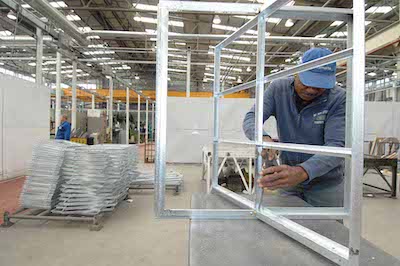
Stage 3: Frame and sash assembly (including welded corners)
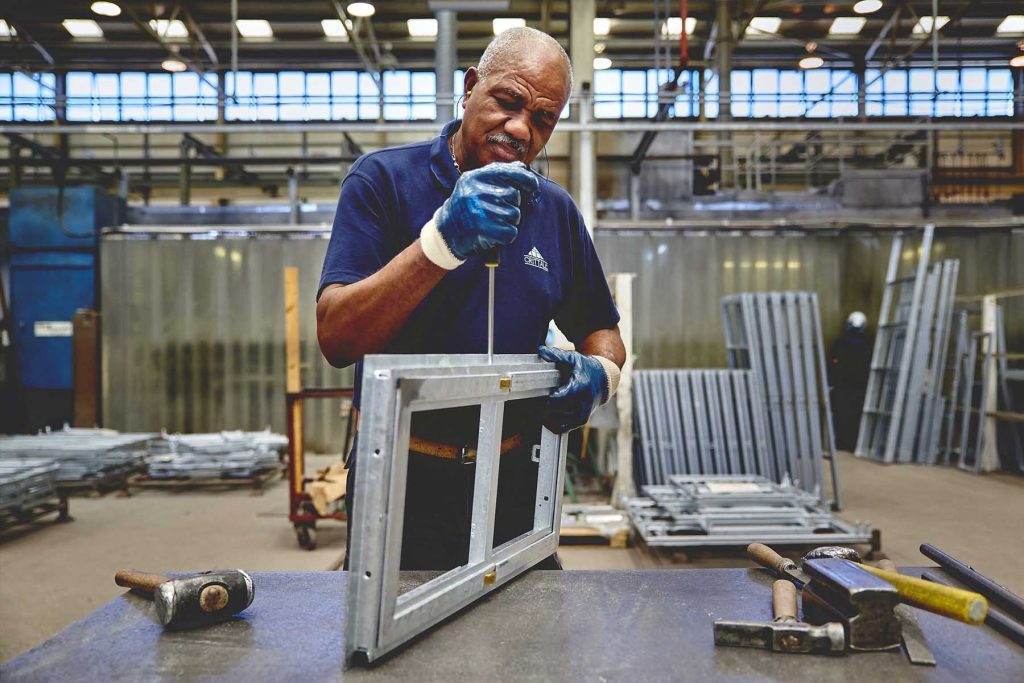
Once sections are prepared, they are assembled into frames and opening sashes. In steel window manufacturing, corner integrity and squareness are central, so assembly commonly uses jigs and controlled welding.
Crittall’s specifications reference welded construction and normal manufacturing tolerances for flatness and squareness in relevant systems.
What this delivers: structural stability, consistent operation, and fewer issues during glazing and installation.
Stage 4: Hot-dip galvanising (the foundation of corrosion resistance)
Crittall describes external steel windows and components being hot-dip galvanised, often to BS EN ISO 1461, as a key stage in long-term protection.
Hot-dip galvanising coats the steel with zinc by immersion, creating a bonded layer that protects the base metal in external environments.
What this delivers: the primary defence against corrosion—one of the most important contributors to long service life in steel windows.
Stage 5: Surface preparation and factory powder coating (Duralife®)
After galvanising, the frame surface must be correctly prepared for finishing. Crittall describes its two-stage protection system as Duralife® polyester powder coat over a hot-dip galvanised substrate.
Powder coating is then cured to form a robust, consistent finish and is available in a wide range of colours.
What this delivers: a durable architectural finish that supports long-term appearance while adding an additional protective layer over galvanised steel.
Stage 6: Hardware fit-out and glazing preparation
Once coated and cured, windows move into functional fit-out. This stage includes fitting hardware such as hinges, handles and locking mechanisms, plus preparing the unit for glazing (either in the factory or for site glazing, depending on the application).
In steel windows, hardware alignment and correct seating of seals and components matter because slim profiles depend on precise clearances.
What this delivers: reliable operation, consistent closing pressure, and a better user experience from day one.
Stage 7: Inspection and quality checks before dispatch
A quality windows manufacturer will carry out multiple checks before a window leaves the factory. Common checks include:
- dimensional verification (correct sizes, squareness)
- operational checks (opening/closing smoothness)
- visual inspection (finish quality and damage)
- hardware function verification
- readiness for delivery and installation
Crittall also publishes range-level performance messaging (for example, referencing proven performance characteristics on certain product pages) alongside its long-life corrosion protection system.
What this delivers: reduced site snagging, fewer call-backs, and more confidence for specifiers and installers.
Why specifiers choose Crittall: the manufacturing benefits in plain terms
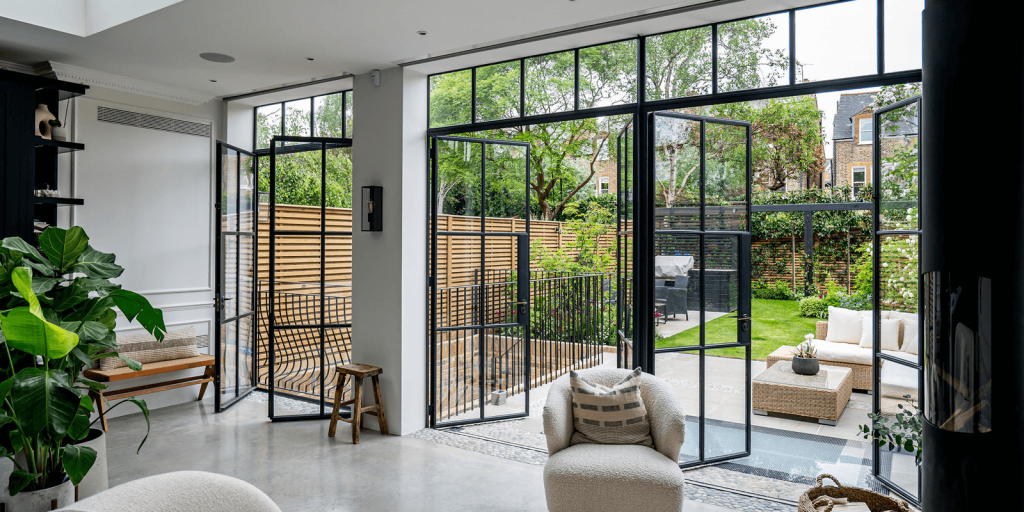
When you’re comparing steel window suppliers, it’s easy to get lost in images and sightline diagrams. Manufacturing details translate into practical benefits you’ll actually notice:
Long-life protection system
Crittall’s combination of hot-dip galvanising and Duralife® polyester powder coating is repeatedly positioned as a long-life, low-maintenance approach—commonly linked to life expectancy exceeding 60 years (with correct maintenance).
Consistent architectural finish
Factory-controlled preparation and powder coating supports a consistent finish across multiple openings—important on commercial elevations and high-visibility residential projects.
Specialist steel manufacturing capability
Steel windows demand accurate fabrication. Crittall presents itself as the original steel windows manufacturer, manufacturing in the UK and producing bespoke external steel windows.
Range choice for different building goals
From classic sightlines to modern performance requirements, Crittall’s mix of systems allows specifiers to match the window to the brief—especially where thermal performance requirements are higher (e.g., thermally enhanced or thermally broken systems).
Sustainability: what Crittall states (and what it means)
Crittall states its external steel windows are made in Britain and manufactured from high grade, recycled steel. From a sustainability perspective, two points are worth keeping in mind:
Recycled content can reduce raw material impact compared with virgin input
Long service life can reduce replacement cycles, which can be a major contributor to lifecycle impact
In practice, durability is a sustainability advantage—particularly where replacement would be disruptive, costly or waste-intensive.
Questions to ask any windows manufacturer (and why they matter)
Use these questions to compare manufacturers on real substance, not just brochure claims:
- Are the windows hot-dip galvanised? If yes, to what standard?
- What is the full coating system? (substrate + finish + curing process)
- How are corners constructed? (welded, controlled tolerances, inspection)
- How is finish quality controlled? (preparation, film build targets, QC checks)
- What’s the expected service life and maintenance guidance?
- What range options exist for thermal performance needs? (thermally enhanced / thermally broken systems)
If a manufacturer can answer clearly—with published technical documentation—you’re usually dealing with a more reliable supplier.
Conclusion
Steel windows earn their reputation through manufacturing discipline: accurate fabrication, robust corrosion protection, controlled finishing, and proper inspection before dispatch.
Crittall’s published approach focuses on those fundamentals—UK manufacturing, recycled steel input, a defined galvanising and powder coating system, and ranges that serve both traditional aesthetics and modern performance requirements. If you’re choosing a windows manufacturer for a project where longevity, slim sightlines and confidence in specification matter, those manufacturing choices are exactly what you should be looking for.