
 Manufacturing
 Downloads
 Gallery
Steel Doors for High-Traffic Homes: Pets, Kids, Fingerprints, and Real-World Durability
- 24 February 2026
- News
The Gap Between Showroom and Real Life
There is a particular kind of optimism that happens when specifying doors for a residential project. The finish looks immaculate. The sampleboard is pristine. The product photography shows clean lines in an empty hallway with excellent natural light and, crucially, no actual people in it.
Then the family moves in.
For architects, interior designers, and residential developers working on family homes — whether single high-spec builds, housing developments, or whole-house renovation projects — door specification carries long-term consequences that go well beyond aesthetics. A door that performs poorly under daily pressure from children, pets, and general household activity reflects on everyone involved in the build. Callbacks, maintenance complaints, and premature replacement are expensive in time, cost, and professional reputation.
This is where steel doors — specifically those manufactured by Crittall Windows — deserve serious consideration in any family home specification. Not simply for what they look like on day one, but for how they perform on day three thousand.
Understanding What “High-Traffic” Actually Demands
When specifying for family homes, it is worth being honest about what these environments put doors through on a daily basis.
Dogs scratch. Children slam. Teenagers lean. Toddlers press sticky hands against every available surface. School bags swing into frames. In homes with multiple occupants of different ages, a door might be opened and closed fifty or sixty times in a single day — not gently, and rarely with particular care.
From a specification perspective, this translates into some very specific performance requirements:
- Dimensional stability under repeated physical stress and seasonal humidity and temperature variation
- Surface resilience against scratching, scuffing, impact marking, and repeated cleaning
- Frame integrity at fixings and joints over years of repeated loading
- Seal consistency — draught and weather performance that holds as the installation ages
- Security performance that does not diminish as wear accumulates
Steel, manufactured to Crittall’s standards, is designed to address each of these criteria in ways that timber and uPVC alternatives typically struggle to match across a comparable lifespan.
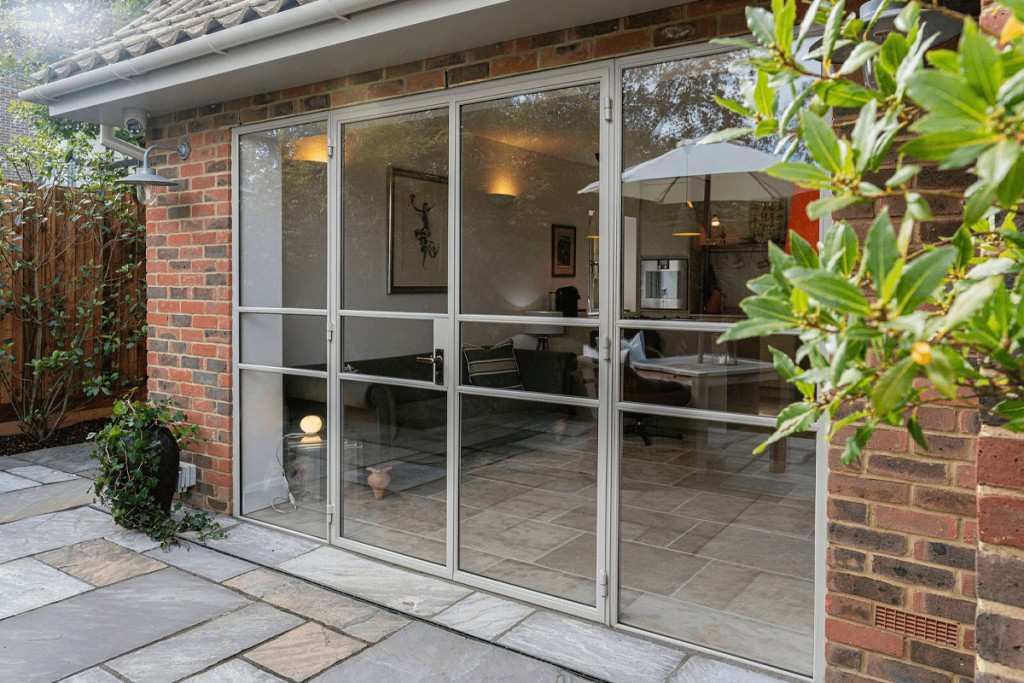
Why Steel Performs in Demanding Residential Environments
Dimensional Stability Is Not a Small Detail
One of the most common causes of door performance failure in residential settings is frame distortion. Timber absorbs moisture. It swells in winter, contracts in summer, and over several years in a home with wet dogs, steamy kitchens, and inconsistent heating, it shifts enough to cause latching problems, draught infiltration, and seal breakdown.
For developers and architects, this matters commercially. A timber door that begins performing poorly within five to seven years of installation becomes a warranty and reputation issue, not just a maintenance inconvenience for the homeowner.
Crittall’s steel profiles are highly resistant to the kind of dimensional change that seasonal humidity and temperature variation introduces in other materials. The accuracy built into the manufacturing process is designed to remain consistent whether the door is installed in a draughty Victorian terrace or a contemporary new-build with underfloor heating. For specifiers looking to reduce post-handover issues on family home projects, this stability is a meaningful specification advantage.
Pet Ownership and Surface Performance
Pet ownership across the UK is genuinely widespread, and its cumulative impact on door performance is consistent enough to warrant direct consideration at specification stage.
Claw marks, moisture from wet coats, repeated impact from dogs at doors, and the damage that anxious animals inflict on door bases and frames — these are standard conditions in a large proportion of family homes, not edge cases.
Crittall’s powder-coated steel finish is designed to resist surface abrasion considerably more effectively than painted timber in typical residential use. Where a timber door frame will show claw contact as gouges exposing bare wood — which then absorbs moisture, discolours, and degrades without intervention — a powder-coated steel surface is engineered to minimise this kind of progressive surface damage.
For residential developers, specifying a finish that holds up visibly to the realities of pet ownership is a practical quality differentiator that clients notice and value over time.
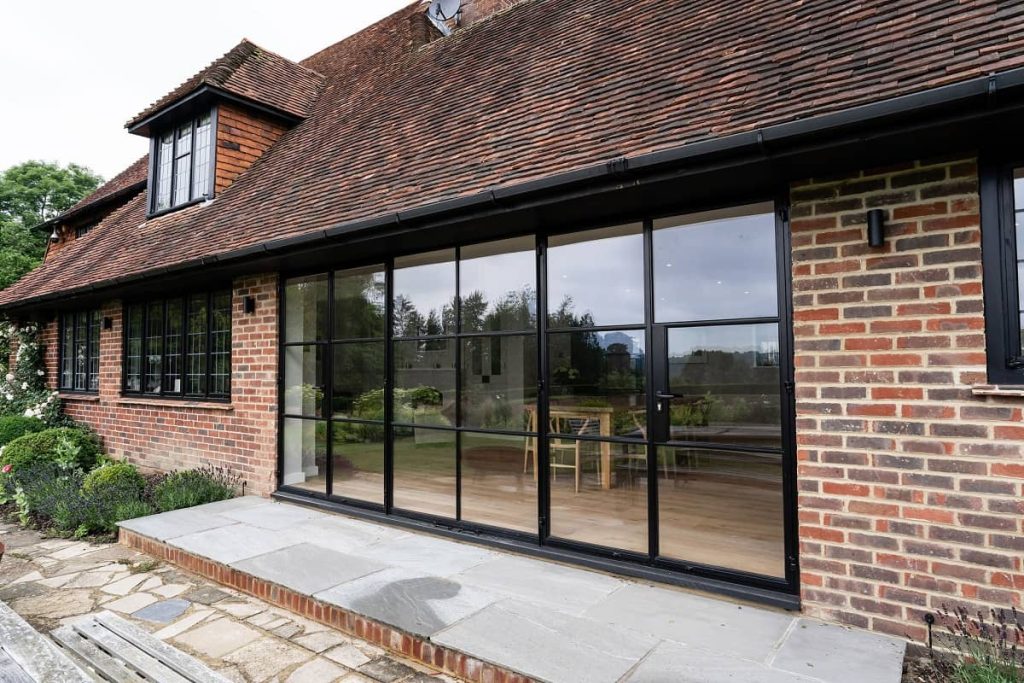
Children, Impact, and Frame Longevity
Architects and designers working on family homes are used to clients who want beautiful spaces. What those clients sometimes underestimate — and what experienced specifiers account for — is how quickly children redistribute energy in a room, including the energy directed at doors.
Slamming is the obvious concern. But the cumulative effect of a door being swung hard, leaned against, kicked at the base, and generally treated as furniture rather than architecture adds up meaningfully over years. The failure typically appears at the frame-to-wall junction first — fixings work loose under repeated impact loading, the frame shifts fractionally, and what was a flush, elegant installation starts to feel draughty and look tired.
Steel frames, by virtue of both material strength and the precision with which Crittall engineers the door-to-frame relationship, are designed to maintain their integrity under this kind of repeated loading more effectively than timber alternatives in comparable conditions. The door continues to latch cleanly, the seals compress correctly, and the visual line of the frame stays true — not just in year one, but across the realistic lifespan of the installation.
For architects specifying on projects where end users will be families with young children, this is worth factoring into material conversations early rather than discovering its relevance through post-handover feedback.
The Glazing Question in Family Contexts
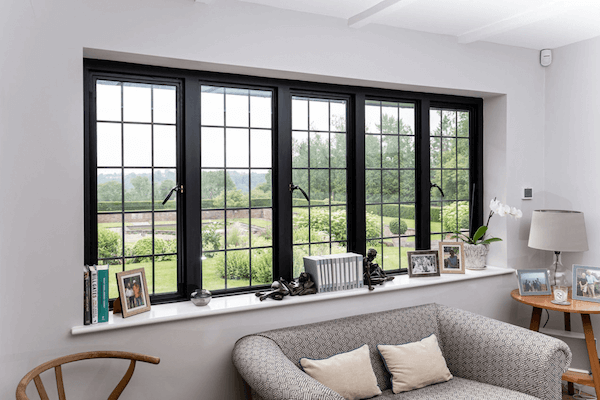
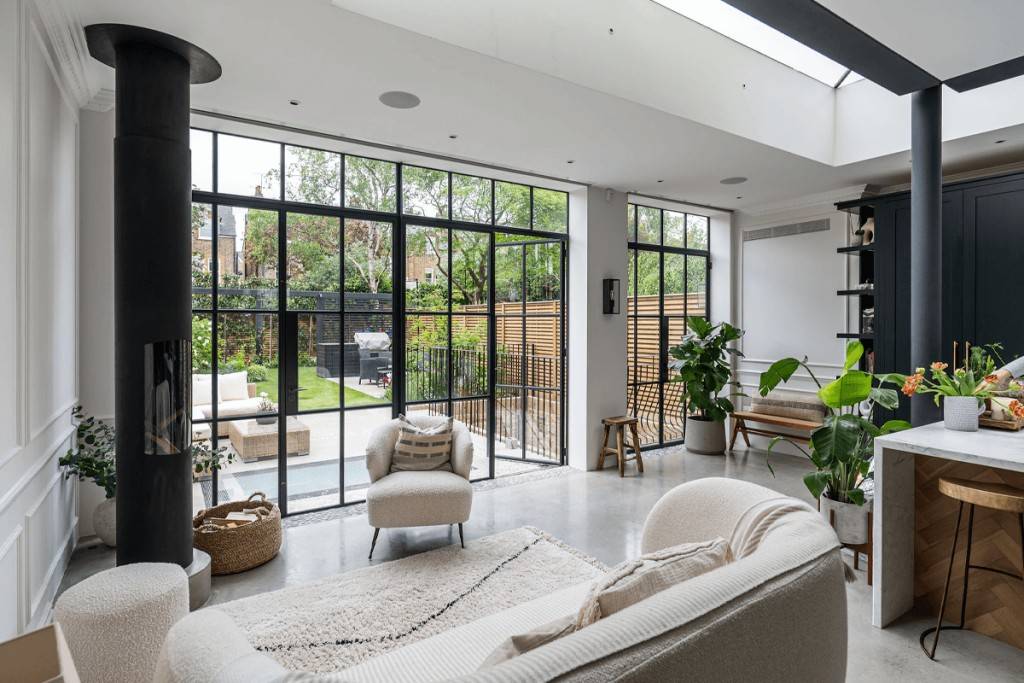
Crittall’s signature aesthetic — slim steel profiles and well-proportioned glazed panels — is one of the primary reasons designers specify their products. The quality of light that comes through a Crittall glazed door is difficult to replicate with other systems.
The natural concern in family contexts is whether extensive glazing and active children represent a sensible combination.
The answer depends on specification. Crittall steel doors can be specified with safety glazing appropriate to the installation context, and the steel frames holding that glazing are designed to be considerably more resistant to deformation under incidental impact than timber or uPVC alternatives. Because the frame itself is highly resistant to the flexing and shifting that moisture and repeated impact accumulate over time, glass-to-frame seal integrity is better maintained across the life of the installation.
In practical terms, a well-specified Crittall glazed door in a family home hallway is designed to perform safely and look well for many years — and the same cannot be reliably said of glazed panels set in frames more susceptible to dimensional change.
Maintenance Reality: What Gets Specified Gets Lived With
Here is something worth saying plainly: homeowners do not maintain doors the way product specifications assume they will. Annual repainting of timber gets deferred. Seasonal frame adjustments do not happen. Hardware lubrication schedules are ignored entirely.
The practical implication for specifiers is that the maintenance burden built into a specification is the maintenance burden that actually falls on the building — not the theoretical schedule described in a technical data sheet.
Crittall steel doors carry a genuinely low ongoing maintenance requirement. The powder-coated finish is designed to perform without periodic repainting or seasonal treatment. Everyday marks — fingerprints, nose prints, whatever a busy household produces — typically require nothing more than a damp cloth.
For residential developers, lower maintenance requirements help reduce post-sale service demands and support a long-term quality narrative. For private clients working with architects or designers, it means the upfront investment is not quietly undermined by a maintenance commitment that realistically will not be met.
Thermal Performance: Not an Afterthought
Energy efficiency is a live conversation on virtually every residential project, and rightly so. A door that creates a cold bridge or allows draught infiltration is a problem — for building performance calculations, homeowner comfort, and increasingly for compliance purposes.
Crittall’s contemporary steel door products incorporate thermally broken profiles specifically designed to address what was historically a limitation of steel frame construction. Available across relevant systems in the Crittall range, this thermal break technology is intended to deliver the structural and aesthetic advantages of steel without the thermal bridging that earlier steel frame products could introduce.
For architects and developers working to specific energy performance targets, this means steel doors can be properly integrated into the building’s thermal envelope rather than treated as a performance compromise accepted for aesthetic reasons.
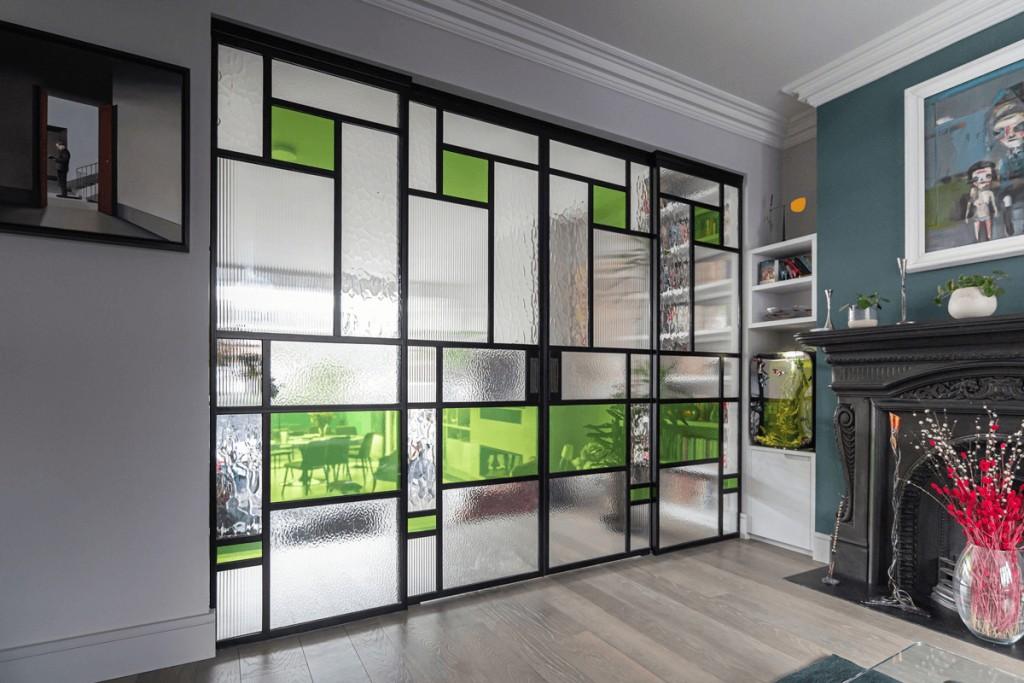
The Longer View: Why Specification Decisions Compound
For architects, developers, and interior designers, the choice of door manufacturer is rarely a single-project decision. It reflects professional judgement that clients, planning authorities, and end users evaluate across multiple projects over time.
Crittall’s manufacturing history, dating from 1889, offers specifiers something genuinely useful: a demonstrable track record of products that have performed across generations of real residential use. The proportions and profiles that define the Crittall aesthetic have not simply remained desirable — they have remained structurally considered and practically effective in buildings that have been lived in, hard, for decades.
When specifying for family homes — environments where the gap between day one condition and daily reality closes very quickly — that kind of long-term performance record is exactly the foundation a specification should be built on.